
Address
Phum Boeng Thum Ti Pir, Sangkat Boeng Thum, Khan Porsenchey, Phnom Penh, Cambodia. 120907
Call Us
+86-13806227077


Views: 11 Author: Site Editor Publish Time: 2025-09-15 Origin: Site


Construction sites are among the harshest work environments imaginable. Between constant exposure to dust, dirt, moisture, and heavy physical impacts, the equipment and tools professionals rely on daily face serious challenges. For workers such as carpenters, electricians, plumbers, and general contractors, having tools on hand is critical—but just as crucial is the need for a reliable storage solution that can withstand the daily rigors of the site.
Ordinary bags or containers simply don’t cut it in these demanding conditions. A tool bag used on a construction site must be rugged, durable, and designed to protect tools from damage while providing easy accessibility. It also needs to endure rough handling, unpredictable weather, and challenging terrain without failing.
The phrase “durable tool bag” is often used casually, but understanding what it truly means requires looking deeper into the materials, construction, and design that set such bags apart.
Strong Fabrics: Durable tool bags are typically made from heavy-duty materials such as ballistic nylon, military-grade canvas, or high-denier polyester. These fabrics offer excellent resistance to abrasion, tears, and punctures—common hazards on construction sites.
Reinforced Stitching: The seams on a tool bag endure constant stress from heavy loads and rough handling. Double stitching, bar-tacking (reinforcement stitches in high-stress areas), and box-X patterns strengthen these seams to prevent ripping and seam failure.
Robust Hardware: Durable bags use heavy-duty zippers—often YKK brand metal zippers—along with metal D-rings, buckles, and reinforced handle attachments. These components resist corrosion and mechanical failure much better than plastic alternatives.
Rigid or Semi-Rigid Frames: To protect tools inside and maintain bag shape, many durable tool bags feature reinforced bottoms, padded inserts, or semi-rigid frames made from materials like plastic or metal.
Water-Resistant Coatings: Although not every durable tool bag is fully waterproof, many include water-repellent coatings or liners to guard against rain, spills, and moisture absorption.
The combination of these design elements ensures that the tool bag will perform reliably over time and withstand the physical demands of construction work.
Understanding the technical features that boost durability helps you choose the right bag for your job. Let’s examine the most critical design highlights in more detail.
On any heavy-duty tool bag, stitching quality can be a weak link if not executed properly. Reinforced stitching involves:
Double or Triple Stitching: Multiple rows of stitches along seams to distribute load and prevent seam splitting.
Bar-Tacking: Short, dense stitching at stress points like strap junctions, handle bases, and zipper ends to reinforce vulnerable areas.
Box-X Patterns: Stitching in the shape of a box with an “X” inside strengthens handles and shoulder strap attachments, critical for supporting heavy loads.
Without these reinforcements, seams may fray or tear quickly under construction-site stress.
The exterior fabric must resist abrasion from rough surfaces such as concrete, wood, and metal tools. Materials often used include:
1680D Ballistic Nylon: Extremely tough, used in military gear, highly resistant to tearing and punctures.
Heavy-Duty Polyester or Canvas: Often coated with water-repellent finishes to enhance durability.
PVC or Vinyl Reinforced Panels: These provide waterproofing and add extra protection on bag bottoms or sides.
These fabrics help the bag maintain integrity and appearance despite daily rough treatment.
Zippers are one of the most frequent points of failure on tool bags. Heavy-duty models employ:
YKK Metal Zippers: Known worldwide for durability and smooth operation.
Oversized Teeth and Pull Tabs: For easy gripping, even with gloves on.
Corrosion-Resistant Metals: Hardware that withstands exposure to moisture and chemicals commonly found on job sites.
Metal Buckles and D-Rings: Providing secure strap adjustments and accessory attachments.
This hardware ensures longevity and reliable closure even after heavy use.
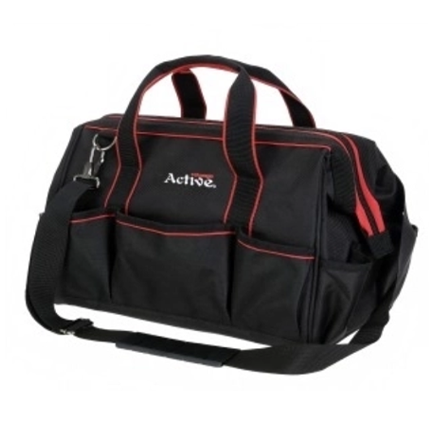
The construction site environment is notoriously challenging:
Dust and Dirt: Fine particles can infiltrate tool compartments and damage delicate instruments.
Physical Impact: Bags are often dropped, kicked, or knocked around.
Moisture and Rain: Exposure to water can damage tools and promote mold or corrosion.
Durable tool bags feature tight-weave fabrics and zipper covers or flaps to prevent dust intrusion. Some designs include sealed seams or internal compartments to isolate sensitive tools.
Reinforced bottoms with rubber or molded plastic panels absorb shocks from drops or impacts. Rigid internal frames protect tools from crushing and maintain bag shape, preventing collapse that could damage contents.
While fully waterproof bags are less common, many feature:
Water-repellent coatings on fabric surfaces
PVC or nylon liners inside compartments
Elevated rubber feet on the base to keep the bag off wet or muddy ground
This moisture management protects tools and helps extend both tool and bag lifespan.
Every construction trade has unique tools and organizational needs. Durable tool bags come in a range of sizes and configurations to meet these demands.
Long compartments for levels, squares, and saws
Hammer loops and external tool holders
Multiple pockets for screws, nails, and chisels
Reinforced bottoms to support heavy hand tools
Insulated compartments for sensitive meters and testers
Multiple labeled pockets to organize wire strippers, pliers, screwdrivers
Padded laptop or tablet sleeves for accessing wiring diagrams
Compact designs for easy maneuvering in tight spaces
Waterproof and wipeable interiors for wet conditions
Large capacity for pipe wrenches, fittings, and sealants
Modular compartments for small parts and specialized tools
Durable, reinforced bottoms to handle heavy and awkward loads
Many tool bags feature modular or expandable designs, allowing tradespeople to customize storage to their daily needs.
One of the best ways to evaluate a tool bag’s durability is through user experiences. Feedback from professionals highlights:
Long-lasting performance: Many workers report using their bags for years with no seam or hardware failure.
Heavy load support: Bags hold heavy tools without sagging or breaking.
Resistance to weather: Water and dust do not penetrate, keeping tools safe.
Time-saving organization: Clearly separated compartments help workers find tools quickly.
Comfort: Ergonomic handles and padded straps reduce fatigue during transport.
For example, one experienced electrician shared:
“I rely on my tool bag every day for dozens of tools. After four years of daily use, the reinforced stitching and metal zippers are still solid. The waterproof base means I’m never worried about rain or spills ruining my expensive meters.”
Such testimonials reflect the critical role durable tool bags play in enhancing productivity and protecting investment in tools.
In the tough world of construction, your tools deserve reliable protection and smart organization. A durable tool bag with reinforced stitching, rip-resistant fabric, and heavy-duty zippers isn't just a convenience—it’s a necessity. It boosts productivity, protects your tools, and helps you work smarter every day.
If you're looking for tool bags that truly stand up to the demands of your trade, Kunyu Tool Bags (Cambodia) Co., Ltd. is your trusted source. With years of manufacturing expertise and a commitment to quality, Kunyu offers rugged, well-designed tool bags built for professionals like you.


